Anti-ICE demonstrations in Minneapolis and Texas highlight intensifying disputes over detention, force, and court oversight
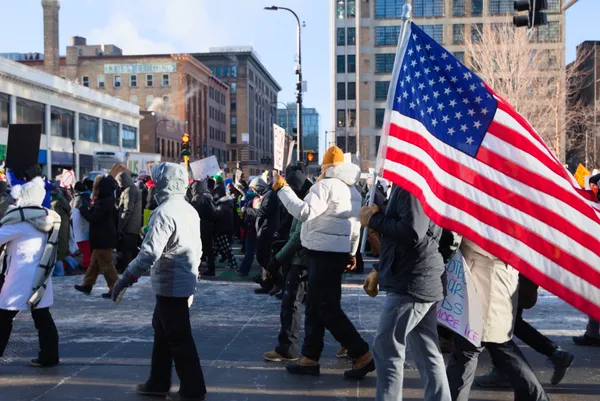
Protests span Minneapolis and South Texas as immigration enforcement faces legal and public scrutiny
Demonstrations targeting U.S. Immigration and Customs Enforcement expanded across Minneapolis and the South Texas Family Residential Center in Dilley, Texas, in late January 2026, as federal immigration enforcement actions prompted renewed public outcry, local-government litigation, and heightened attention to crowd-control tactics.
In Minneapolis, protests have continued in the weeks following the Jan. 7 killing of 37-year-old Renée Nicole Good during an immigration-related operation and the Jan. 24 fatal shooting of 37-year-old nurse Alex Pretti by federal agents. The incidents have become rallying points for demonstrators calling for accountability and changes to enforcement practices. State and city leaders have also moved the dispute into federal court through a lawsuit seeking to halt what they describe as a large-scale federal deployment into Minnesota that began in December 2025.
Minneapolis: protests, dispersal orders, and a widening legal fight
Public demonstrations have centered on federal buildings and other locations viewed as connected to immigration enforcement. In one daytime action on Jan. 23, law enforcement issued dispersal orders at the Whipple Federal Building after protesters blocked an access road; officials reported that ice chunks were thrown, damaging vehicles. Other actions around the Twin Cities have included disruptions and arrests at Minneapolis–St. Paul International Airport tied to opposition to deportation-related logistics.
The state of Minnesota, together with the cities of Minneapolis and Saint Paul, filed a federal lawsuit on Jan. 12 seeking to end the ongoing deployment of federal agents, alleging constitutional and administrative-law violations and requesting immediate court intervention. Separately, federal court proceedings have also examined limits on certain tactics against peaceful protesters, reflecting a fast-moving confrontation between local authorities, federal agencies, and the judiciary over how enforcement and demonstrations are being policed.
Dilley, Texas: chemical irritants used as protesters gather outside family detention facility
On Jan. 28, protesters gathered outside the South Texas Family Residential Center in Dilley, where state police used pepper balls—chemical irritants—to disperse part of the crowd. The protest focused on immigration detention and featured chants and signs opposing the confinement of children.
The demonstration coincided with increased attention to the case of five-year-old Liam Conejo Ramos and his father, Adrián Alexander Conejo Arias, who have been held in immigration custody. A federal judge temporarily barred their removal from the United States while litigation continues.
What the Dilley facility is and why it matters
The Dilley complex is a large-scale immigration detention site with capacity for up to 2,400 people. It was built in 2014 to hold families, later idled in 2024 after federal contract funding ended, and then reactivated in 2025 under a renewed arrangement to resume operations. The facility’s reopening has made it a focal point for national debate over family detention and the infrastructure used to carry out immigration enforcement.
Key dates: Jan. 7 (Renée Nicole Good killed in Minneapolis), Jan. 12 (Minnesota and Twin Cities file lawsuit), Jan. 23 (Whipple Federal Building dispersal orders), Jan. 24 (Alex Pretti killed), Jan. 28 (pepper balls used in Dilley protest).
Central issues: use of force during enforcement and protest response, detention of families and children, and compliance with court oversight.
The overlapping protests in Minneapolis and Dilley underscore how local events, detention policy, and courtroom battles are converging into a broader national conflict over immigration enforcement and civil liberties.