How Federal Agents Identify Minneapolis Anti-ICE Protesters Through Facial Recognition, Phones, Social Media and Data Fusion
A surveillance question sharpened by a major enforcement surge
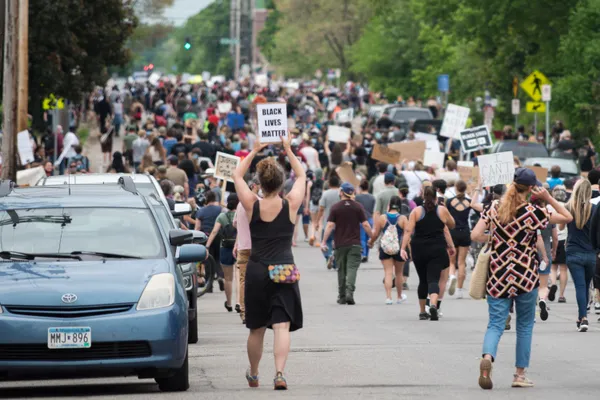
Federal immigration enforcement in the Twin Cities has intensified since late 2025, with a large concentration of agents deployed to the Minneapolis–St. Paul area in early 2026. As protests and rapid-response networks formed around enforcement activity, a parallel concern emerged: how federal agents can identify demonstrators and volunteers who attempt to track, film, or disrupt immigration operations.
Verified public records, litigation filings, and agency disclosures show that identification can come from a layered mix of biometric tools, open-source monitoring, and data systems that combine government and commercially sourced information. Together, these capabilities can allow agents to connect a face in a crowd to a name, map social connections, and link a person to vehicles, addresses, and prior interactions with government systems.
Two facial recognition pathways: databases at scale and scanning in the field
One pathway relies on facial recognition platforms that compare a photograph against large image repositories. A second pathway involves a government-deployed mobile capability designed for field use.
Public disclosures identify Mobile Fortify as a tool used by federal immigration components to capture biometric identifiers from a person in the field. The tool has been described as enabling face-based identification and related biometric checks on government-issued devices. Separate public reporting and advocacy documentation describe challenges centered on consent, retention periods, and the risk of misidentification, particularly in fast-moving encounters.
In Minnesota, public reporting has also linked federal operations to the use of Clearview AI as an additional facial recognition capability. Clearview AI has stated publicly that its product is not available to the general public and is provided to vetted government and law enforcement users.
Phones, social platforms, and rapid identification
Identification does not require a single tool. In practice, it can be built from small fragments: a protest livestream capturing faces, a social media post naming an organizer, or a photo taken during a street encounter. Publicly described federal practices include monitoring online activity and using structured analytic workflows to convert open-source material into leads.
Separately, procurement and planning documents made public in recent months show continued federal interest in expanding social media monitoring capacity, including around-the-clock analytic coverage tied to enforcement targeting centers.
Data fusion: linking identities to locations and networks
Once a person is identified, the next step is often correlation. Public records and reporting describe federal use of integrated data platforms built by Palantir to support immigration investigations and enforcement workflows. These systems have been described as combining information across government datasets and, in some cases, commercially sourced data to accelerate targeting, case building, and location tracking.
This matters in protest settings because identification can extend beyond a single appearance. A name can be linked to past addresses, known associates, vehicles, prior government encounters, and other data trails that help locate someone later.
Key verified capabilities frequently discussed in Minnesota-related reporting
- Facial recognition searches using large-scale image repositories.
- Field collection of face-based identifiers via Mobile Fortify on government devices.
- Expanded social media monitoring and rapid open-source analysis.
- Data-fusion platforms that connect identities to locations, networks, and historical records.
The central factual dispute is less about whether identification is possible and more about the boundaries: when consent is required, how long data is retained, what error rates mean for real-world encounters, and how oversight applies when multiple systems reinforce the same conclusion.
What remains contested
Public statements from civil liberties advocates and federal spokespeople diverge on core issues including whether individuals can refuse certain scans, how matching thresholds are set, what datasets are queried, and what safeguards apply when results conflict with other documentation. Those questions are likely to remain central as Minnesota’s enforcement surge continues and protests persist.