How invoking the Insurrection Act could change policing, National Guard roles, and civil authority in Minneapolis
A rarely used federal power is at the center of a Minneapolis standoff
Federal authorities have intensified immigration enforcement operations in Minneapolis and St. Paul under an initiative publicly described as “Operation Metro Surge,” prompting sustained demonstrations and legal challenges. The situation escalated after an ICE agent fatally shot Renée Nicole Good, 37, in south Minneapolis, an incident that triggered days of protests and sharpened disputes between federal officials and Minnesota’s Democratic-led state and local leadership.
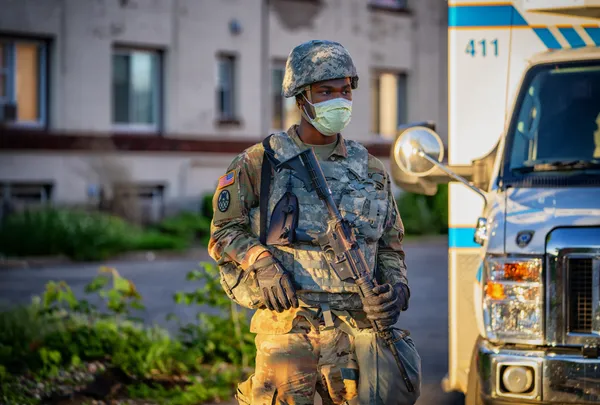
President Donald Trump has threatened to invoke the Insurrection Act, a set of federal statutes that can authorize domestic deployment of active-duty military forces and the federalization of National Guard troops in specified circumstances. As of Jan. 20, 2026, the Act has been threatened but not invoked.
What the Insurrection Act authorizes, and what it would change
Under ordinary conditions, federal law generally restricts the U.S. military from performing civilian law enforcement functions. The Insurrection Act is widely recognized as the principal statutory exception: it can permit the president to use military forces domestically to enforce federal authority, respond to certain forms of civil disorder, or address conditions tied to the deprivation of constitutional rights when civil authorities are unable or unwilling to protect them.
If invoked for Minneapolis, the practical legal shift would be the potential for troops operating under federal authority to engage in roles that otherwise would be constrained as direct law enforcement activity. That could include providing operational support to protect federal personnel and property and, depending on mission orders, participating more directly in enforcing laws during a declared emergency posture.
- Active-duty military could be deployed domestically under federal command.
- National Guard forces could be “federalized,” moving from state control to federal control.
- Military involvement in law enforcement could expand beyond typical constraints, depending on the scope of orders.
A required presidential step: the order to disperse
Federal law also requires a formal presidential proclamation ordering those deemed to be participating in unrest to disperse and return home within a limited time when the president considers it necessary to use the armed forces under the Insurrection Act framework. Historically, similar proclamations have been used in episodes involving obstruction of federal court orders and large-scale disorder.
How this intersects with Minnesota’s current legal battles
Minnesota officials have pursued litigation seeking to limit federal tactics used during the immigration operation, arguing that enforcement actions have swept too broadly and implicated constitutional protections. A federal judge in Minnesota has issued a preliminary injunction placing limits on certain federal crowd-control and detention tactics directed at peaceful protest activity.
Separately, the federal government has defended the legality of the immigration operation in court, while the broader confrontation has included investigations and public allegations on both sides over whether state and local officials are obstructing federal enforcement.
Operational reality: planning signals and uncertainty
Even without a formal invocation, federal planning for a potential deployment has been reported, including Pentagon steps placing troops on alert for possible movement to Minnesota. For Minneapolis residents, the central uncertainty is not only whether troops would arrive, but under what legal authority, what rules of engagement would govern their actions, and how the deployment would be coordinated with local police and the Minnesota National Guard.
If the Insurrection Act were invoked, it would mark a major escalation in the federal role in public order operations in Minneapolis, expanding the president’s capacity to use military forces domestically and potentially altering command authority over Guard troops.
In the near term, the courts are likely to remain a key arena shaping what federal agents can do on the ground—while the Insurrection Act threat continues to hang over a city already under intense strain from enforcement, protest, and political conflict.