In Minneapolis, visitors link three fatal encounters into a growing circuit of public mourning sites
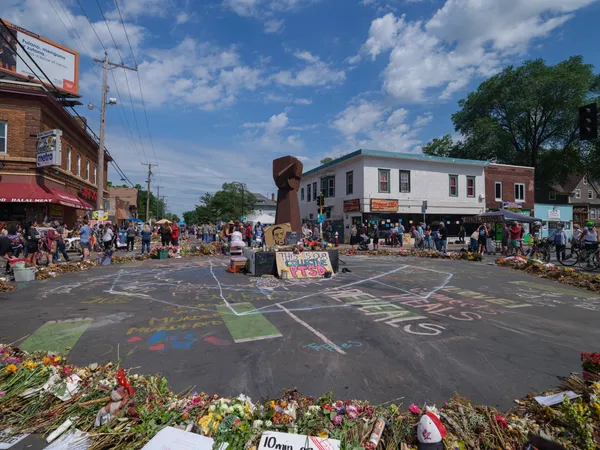
A new route of remembrance has emerged across south Minneapolis
In recent weeks, a pattern of visits has taken shape in south Minneapolis: residents are moving between three locations tied to deaths that have each drawn sustained public attention. The sites include George Floyd Square at East 38th Street and Chicago Avenue, the Portland Avenue location where Renée Nicole Macklin Good was shot on Jan. 7, 2026, and the Whittier intersection near 26th Street and Nicollet Avenue where Alex Jeffrey Pretti was killed on Jan. 24, 2026.
The visits are not organized as a single formal event, but the repetition—stopping at each location, leaving flowers, and reading messages—has given the circuit the feel of a civic ritual. The three places function as open-air memorials where the public can acknowledge loss in real time, often alongside strangers.
What happened at the three locations
George Floyd Square (May 25, 2020): Floyd was killed during an arrest by Minneapolis police at the intersection of 38th and Chicago. The location became an internationally recognized memorial and protest site, accumulating offerings and artwork over time.
Portland Avenue near East 34th Street (Jan. 7, 2026): Good, 37, was fatally shot during a federal immigration enforcement operation. The shooting occurred on Portland Avenue between East 33rd and 34th streets. The death triggered protests and a widening debate over the scale and oversight of federal enforcement activity in Minnesota.
26th Street and Nicollet Avenue (Jan. 24, 2026): Pretti, 37, an intensive care nurse employed by the U.S. Department of Veterans Affairs, was shot and killed by federal agents near the intersection in the Whittier neighborhood. Officials said he was a Minneapolis resident and a U.S. citizen.
How the memorials are maintained and what visitors leave behind
At all three sites, the public has built memorials through accumulated objects rather than through a single permanent monument. Visitors have left flowers, handwritten notes, and personal tokens, alongside signs addressing public policy and enforcement practices. The result is a form of living archive: items appear, weather, fade, and are replaced by new offerings as public attention shifts and returns.
At George Floyd Square, organized caretaking and preservation work has developed since 2020, including efforts to protect and conserve offerings left at the intersection. The continuing presence of those offerings has helped keep the site legible not only as a historic location but also as a current place of gathering.
The three memorials share a common physical language: flowers, signage, and messages directed simultaneously to the deceased, to the community, and to institutions with power over public safety.
A shared frame: grief, accountability, and preventability
People visiting multiple sites often describe their stops as a way to hold several losses together—linking deaths separated by years, agencies, and circumstances. The act of moving from one location to another also underscores proximity: the Good memorial is only a short distance from George Floyd Square, and the Pretti site sits within the same south Minneapolis geography of daily commuting, neighborhood businesses, and residential blocks.
As Minneapolis continues to debate how to mark its most consequential public sites—through permanent design, preservation, or community-led stewardship—these three places are already functioning as a map of contemporary mourning, shaped by ongoing public presence rather than official ceremony.