Mayor Jacob Frey says Minneapolis protests remain largely peaceful amid federal immigration operation and troop threat
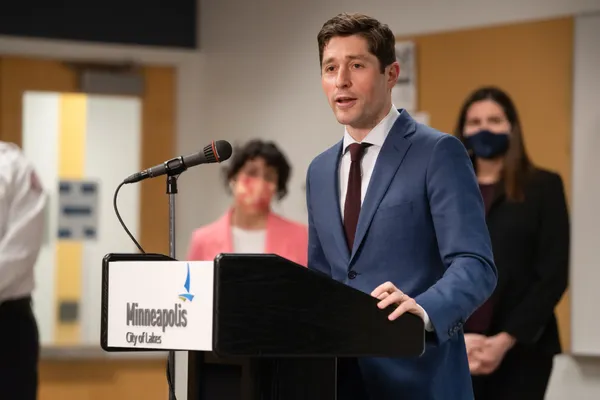
City hall frames unrest as a test of constitutional rights and local control
Minneapolis Mayor Jacob Frey has urged residents to continue protesting peacefully as demonstrations have expanded in response to a large-scale federal immigration enforcement effort in the Twin Cities and the prospect of military involvement. In multiple public appearances on January 18, Frey described the federal presence as disproportionate to local public-safety needs and said the city would not respond to federal actions with disorder.
The current tension follows the launch of what federal officials have described as an unusually large immigration operation in the Minneapolis–St. Paul area, involving thousands of federal personnel. Frey has said Minneapolis has roughly 600 police officers and argued that the scale of federal deployment risks escalating conflict rather than improving safety.
Competing claims over security, protests, and the role of the military
Frey has rejected proposals to confine protests to a designated “safe zone,” arguing that peaceful First Amendment activity cannot be limited to a single park or a small portion of the city. He has repeatedly called on demonstrators to avoid confrontation, saying local leaders are focused on keeping the peace while maintaining residents’ rights to protest and to observe law-enforcement actions.
At the state level, Minnesota officials have mobilized the National Guard for potential support, though the Guard has not been deployed to the streets. Meanwhile, the possibility of federal troops has become a focal point of the dispute. Frey has said sending soldiers into Minneapolis for domestic enforcement would be unconstitutional and warned that militarization could inflame an already volatile situation.
Federal court order restricts arrests and crowd-control tactics against peaceful observers
A U.S. district judge in Minnesota issued an order limiting how federal officers participating in the immigration operation may interact with peaceful protesters and bystanders. The order bars federal agents from arresting or detaining people who are peacefully protesting or observing, absent reasonable suspicion of a crime or interference with law enforcement activity. It also restricts the use of chemical irritants and other crowd-control measures against peaceful demonstrators and observers.
The ruling came after allegations that federal officers used aggressive tactics during encounters with protesters and observers, raising constitutional questions about retaliation and the chilling of speech. Federal agencies have defended their actions as necessary for officer safety and operational security.
Renee Good shooting intensifies scrutiny and protests
The demonstrations have also been fueled by the January 7 fatal shooting of Renee Good, a 37-year-old U.S. citizen, by an immigration officer during an enforcement action in Minneapolis. Video of the incident circulated widely and has become central to public debate over whether the shooting was justified. Federal authorities have said the officer acted in self-defense, while local officials have publicly disputed aspects of the federal account.
- Jan. 7, 2026: Renee Good was fatally shot during a federal immigration operation in Minneapolis.
- Jan. 16, 2026: A federal judge issued restrictions on how agents may treat peaceful protesters and observers.
- Jan. 18, 2026: Mayor Frey publicly rejected protest “safe zones” and criticized any plan to deploy troops.
City officials have emphasized de-escalation and peaceful protest, while the federal government has framed the operation as a major enforcement effort requiring heightened security.
As protests continue, the immediate questions for Minneapolis include how quickly federal agencies bring local operations into compliance with the court order, whether any additional state support is requested for crowd management, and whether threats of military involvement recede or intensify.