Mayor Jacob Frey tells President Trump Minneapolis was not broken amid federal immigration enforcement backlash
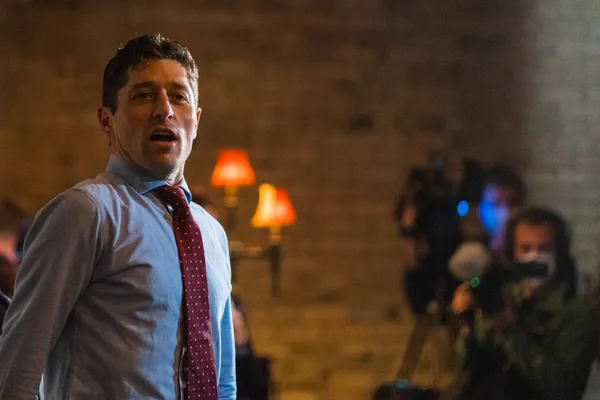
A pointed message after weeks of heightened federal enforcement
Minneapolis Mayor Jacob Frey has delivered an emotional, sharply worded message aimed at President Donald Trump, telling him that federal actions in the city did not succeed in breaking Minneapolis. The remarks come as federal officials moved to wind down “Operation Metro Surge,” a large-scale immigration enforcement campaign that began in early December 2025 and intensified in January 2026.
Federal leaders framed the drawdown as the conclusion of a targeted operation focused on public safety. City and state officials, however, have described the past two months as a period marked by fear, disruption, and escalating tension between local government and federal immigration authorities.
Deaths, investigations, and disputes over evidence
The operation has been overshadowed by several high-profile shootings involving federal immigration personnel in Minneapolis. Renée Nicole Macklin Good, 37, was shot and killed on January 7, 2026, during an encounter involving an Immigration and Customs Enforcement officer. Alex Pretti, 37, an ICU nurse and U.S. citizen, was fatally shot on January 24, 2026, during an incident involving federal agents amid protests and enforcement activity.
Separate developments have added scrutiny to the federal response. A federal investigation has been opened into allegations that immigration officers provided false sworn testimony in connection with a January 14, 2026, shooting in Minneapolis in which Julio Cesar Sosa-Celis survived. In addition, Minnesota authorities have publicly said they have faced obstacles obtaining key evidence in at least one shooting investigation, raising questions about transparency and the ability to conduct independent review.
Economic and civic impacts cited by city leadership
Frey has argued that the enforcement surge produced substantial collateral impacts beyond the individuals directly arrested or detained. In recent public statements, he cited estimates that Minneapolis experienced $203 million in economic impact in January alone, including more than $80 million in losses for small businesses, along with significant hotel cancellations. He also said the city incurred roughly $6 million in costs, largely tied to public safety overtime.
Local officials have further described broader effects on daily life, including increased needs for food assistance and expanded demand for support services for students. Those assertions have been used by city leaders to argue that, regardless of the stated goals of the operation, the outcome included measurable harm to the city’s economic activity and community stability.
Core points of the mayor’s message
In framing his message to the president, Frey emphasized Minneapolis residents’ resilience and civic solidarity. He also argued that enforcement tactics reported by residents and advocates—such as surveillance, harassment, and detentions based on appearance—would be unconstitutional if substantiated, and he called for accountability in the wake of fatalities and disputed official narratives.
- Operation Metro Surge began December 1, 2025, and federal officials announced a drawdown on February 12, 2026.
- Two fatal shootings in Minneapolis during the operation—Renée Good (January 7, 2026) and Alex Pretti (January 24, 2026)—remain central to public scrutiny.
- Minnesota authorities have said access to evidence has been limited in at least one investigation, while a separate federal inquiry is examining alleged false testimony tied to another Minneapolis shooting.
The mayor’s message positioned Minneapolis’ response—protests, mutual aid, and public pressure—as evidence that the city endured the enforcement surge without being subdued.