Minneapolis Fed survey shows Ninth District farm incomes falling even as 2025 crop production stays strong
Strong yields, weaker profits
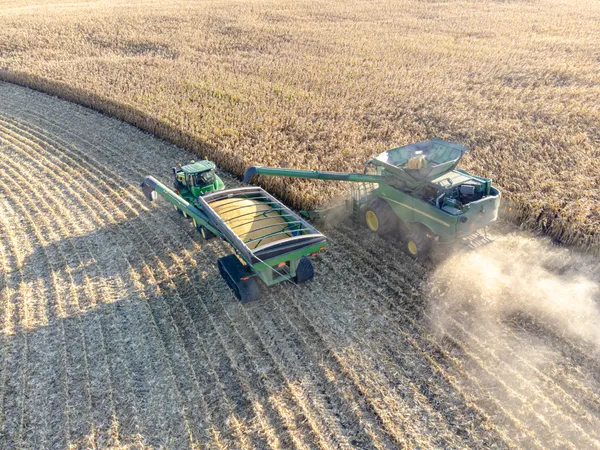
Farm incomes across the Federal Reserve Bank of Minneapolis’ Ninth District fell in mid-2025 despite strong crop production that, in some areas, reached record levels. A regional survey of agricultural bankers covering July through September found that the benefits of abundant harvests were outweighed by weaker commodity prices and uncertainty in international demand, limiting revenue even as output remained high.
The Ninth District spans Minnesota, Montana, North Dakota, South Dakota, and parts of Wisconsin and Michigan. The survey results point to a widening split within agriculture: lenders reported that livestock markets, particularly cattle, provided relative strength while many grain producers faced tighter margins.
What bankers reported in the third quarter
Across the district, 79% of agricultural lenders said net farm income decreased compared with the same period a year earlier. Investment also softened: 70% reported lower spending on capital items such as equipment and buildings, while farm household spending was closer to flat, with many respondents indicating little change from the prior year.
Net farm income: 79% of surveyed lenders reported a decline from a year earlier.
Farm capital spending: 70% reported a decline.
Farm household spending: responses were mixed, with overall conditions near flat.
Credit conditions: more borrowing, slower repayment
The same period showed signs of stress in farm credit. Loan demand increased at more banks than it declined, and renewals and extensions became more common—an indicator lenders often associate with weaker cash flow. In the third quarter, 43% of lenders reported higher loan demand than a year earlier, while 47% reported an increase in renewals or extensions.
Interest rates for agricultural loans edged down modestly, providing some relief, but repayment performance deteriorated. Nearly half of surveyed lenders (49%) said repayment rates fell from a year earlier. Some banks also tightened terms at the margin, with 17% reporting higher collateral requirements. Only a small share reported refusing loans because of funding shortages.
“Our crop yields will be good this year but because of crop prices our farmers are going to have a poor year.”
Land values hold up as cash rents soften
Farmland values were more resilient than incomes, though results differed by land type. On average, nonirrigated cropland values increased 4% from the third quarter of 2024, while irrigated cropland values were roughly flat and ranch- and pastureland values declined by more than 4%.
Cash rents, which tend to respond more directly to near-term profitability, slipped modestly. Districtwide, nonirrigated cash rents fell by almost 1% and irrigated rents fell by slightly more than 1% from a year earlier, while ranchland rents rose 5%.
Outlook: expectations for further income declines
Bankers’ expectations for the final months of 2025 were broadly negative. For the fourth quarter, 83% of respondents expected farm incomes to decrease compared with the same period in 2024. Many also anticipated continued pressure on repayment rates and additional increases in loan renewals or extensions, signaling that balance-sheet and cash-flow challenges could persist even if production remains strong.
At the national level, USDA forecasts released in early February 2026 projected a slight decline in U.S. net farm income for 2026, alongside a modest rise in government payments and relatively stable production expenses—context that aligns with the district’s reported pressure on profits despite ongoing production capacity.
Morning Mist Gives Way to a Record-Chasing March Thaw

Minneapolis man gets 57 months for attempted juror bribery tied to Feeding Our Future trial

Minneapolis council members challenge MPD response to ICE actions as federal enforcement surge strains city limits