Minnesota clergy ask federal judge to require in-person pastoral visits at Minneapolis ICE holding facility
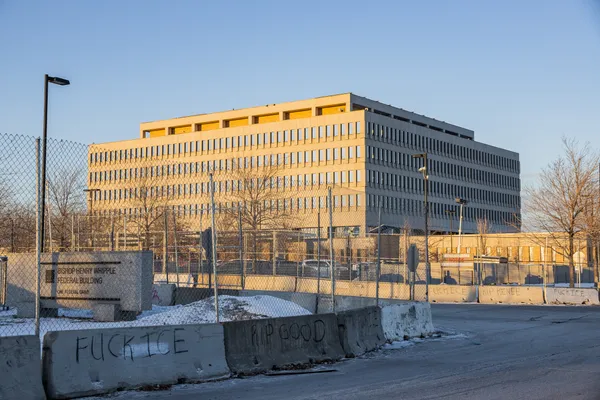
Legal fight centers on access to detainees at the Bishop Henry Whipple Federal Building
Protestant and Catholic clergy in Minnesota are asking a federal judge to order the Department of Homeland Security to allow prompt, in-person pastoral visits for immigrants held at the Bishop Henry Whipple Federal Building in Minneapolis, a federal office complex that has become a focal point of intensified immigration enforcement and repeated public demonstrations.
The request comes through a lawsuit filed in U.S. District Court in Minnesota that argues current restrictions prevent clergy from providing prayer, spiritual counseling and sacramental ministry to detainees. The plaintiffs contend the limits burden religious exercise protected by the First Amendment and the Religious Freedom Restoration Act, a 1993 federal law that restricts the federal government from substantially burdening religious practice without meeting strict legal standards.
What the lawsuit says happened at Whipple
In court filings, the plaintiffs describe multiple occasions when clergy arrived at Whipple seeking to minister to detainees and were refused entry. The complaint highlights Ash Wednesday as a key example, when clergy sought to provide religious rites associated with the start of Lent. The filings describe interactions with federal personnel in which clergy say they were told pastoral visits were not permitted because of security, safety or space constraints, and that detainees were only held for short periods.
The lawsuit asks the court for injunctive relief that would require DHS to allow clergy access on a timely basis rather than through ad hoc decisions that can result in denial.
How federal officials are responding
Federal attorneys and agency officials have argued that Whipple functions as a short-term holding site, not a long-term detention center. In filings, the government has asserted that most individuals are moved to other facilities quickly, often within about a day, and has framed visitation requests as uncommon. A senior local immigration enforcement official overseeing the facility stated in a recent filing that visitor requests are rare and that clergy requests would be handled case-by-case; the official also described an instance in early March when a clergy member left because no detainees were present and said a visit would have been allowed if detainees had been there.
The dispute has practical implications: if a facility is treated as a brief processing site, the government can argue that more formalized visitation arrangements are unnecessary. Plaintiffs, meanwhile, argue that even short stays can coincide with moments of acute fear and uncertainty, and that transfers can happen rapidly, potentially cutting off access altogether.
Broader context: access disputes at Whipple extend beyond clergy
The pastoral-access lawsuit is unfolding alongside other legal challenges involving the Whipple facility. In a separate case last month, a federal judge issued an emergency order requiring DHS to provide detained immigrants faster access to attorneys and to delay out-of-state transfers for a set period, citing barriers that made legal representation difficult in practice.
Support for the clergy’s request has also broadened beyond the named plaintiffs, with multiple faith leaders and organizations backing a court-ordered framework for pastoral access while the litigation proceeds.
- Issue in dispute: whether DHS must provide timely, in-person pastoral access at Whipple.
- Key legal claims: First Amendment free exercise and the Religious Freedom Restoration Act.
- Government position: Whipple is primarily short-term holding; requests can be handled case-by-case.
The court will weigh whether the restrictions are justified by operational and security concerns and whether less restrictive alternatives are feasible while meeting building safety requirements.
The case remains pending in federal court.