Noem claims more than 10,000 immigration arrests in Minneapolis amid lawsuits, protests, and court-ordered limits
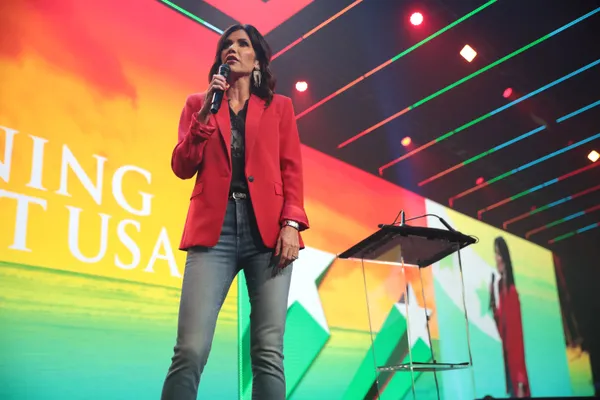
Federal officials expand enforcement footprint in the Twin Cities
Homeland Security Secretary Kristi Noem said Monday that federal authorities have arrested more than 10,000 “criminal illegal aliens” in Minneapolis, framing the figure as the result of a sustained enforcement surge that intensified in recent weeks. Noem also said 3,000 arrests occurred over the past six weeks.
The announcement comes amid an ongoing federal immigration initiative in Minnesota that the Department of Homeland Security has described as its largest enforcement operation to date in the state. Earlier this month, federal officials said roughly 2,000 agents and officers were expected to operate in the Minneapolis–St. Paul area, alongside personnel from multiple federal components involved in immigration enforcement.
Competing claims over scale and targets of arrests
The precise basis for the “over 10,000” number has not been publicly documented in a way that allows independent verification of who was arrested, where arrests occurred, and how many involved civil immigration violations versus criminal charges or convictions. Separate, publicly released immigration enforcement datasets show substantially lower arrest totals for Minnesota over much of 2025, highlighting how definitions, time windows, and geography can produce sharply different counts.
In her public statements, Noem criticized Minnesota Gov. Tim Walz and Minneapolis Mayor Jacob Frey, arguing that local leadership has resisted federal enforcement. State and city officials have disputed that characterization, describing the federal surge as disruptive and raising constitutional concerns about stops, arrests, and the treatment of observers and protesters.
Lawsuits and a judge’s restrictions on federal agents
Minnesota, Minneapolis and St. Paul have filed a federal lawsuit seeking to halt or limit the enforcement surge. The legal challenge argues that federal actions have exceeded lawful bounds and have interfered with day-to-day civic life. In parallel, civil-rights litigation filed on behalf of residents alleges suspicionless stops and racial profiling, including claims that U.S. citizens were detained or questioned based on perceived ethnicity.
A U.S. district judge has also issued restrictions governing how federal agents may interact with peaceful protesters and bystanders observing enforcement activity. The order bars retaliation against peaceful, unobstructive protest activity and prohibits the use of pepper spray, tear gas, or similar crowd-control measures against peaceful demonstrators or observers.
Escalating tensions after a fatal shooting
The enforcement push has unfolded against the backdrop of a fatal Jan. 7 shooting of a Minneapolis resident, Renee Good, by an ICE officer during an enforcement encounter. The death triggered sustained demonstrations, renewed scrutiny of federal tactics, and intensified political conflict between federal authorities and Minnesota’s Democratic leadership.
In recent days, the Pentagon has placed about 1,500 active-duty troops on standby for possible deployment to Minnesota, though the legal authority for any domestic law-enforcement role would depend on additional federal action.
Key developments timeline
- Dec. 2025: Federal immigration enforcement activity increases in the Twin Cities region.
- Jan. 6, 2026: Federal officials describe a major surge of agents into the Minneapolis area.
- Jan. 7, 2026: Renee Good is fatally shot during an encounter involving an ICE officer.
- Jan. 12–15, 2026: Minnesota and Twin Cities litigation advances; separate civil-rights suit filed.
- Mid-January 2026: Federal court issues limits on actions toward peaceful protesters and observers.
The competing claims now focus on scale, legality, and whether enforcement actions are narrowly tied to individualized suspicion—or driven by broader sweeps that courts may scrutinize for constitutional compliance.