Pentagon places 1,500 Alaska-based soldiers on standby amid Minneapolis immigration protests and Insurrection Act threats
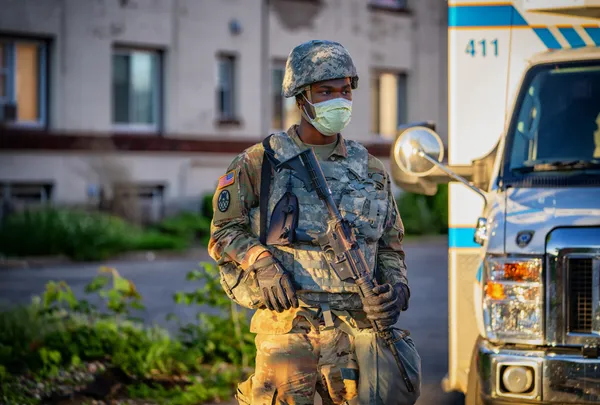
Standby order follows days of protests tied to immigration enforcement operations in Minneapolis and St. Paul
The Pentagon has directed roughly 1,500 active-duty Army soldiers to prepare for a possible deployment to Minnesota, amid escalating tensions in Minneapolis and St. Paul linked to a large-scale federal immigration enforcement effort. The troops are drawn from two infantry battalions of the Army’s 11th Airborne Division, an Alaska-based formation trained for operations in arctic conditions.
Federal officials have framed the potential deployment as a contingency plan rather than a decision to send active-duty forces into the Twin Cities. Public statements from the Defense Department have emphasized readiness to carry out lawful presidential orders, while offering no timetable for movement.
What would trigger an active-duty deployment
One scenario discussed by federal officials centers on possible invocation of the Insurrection Act, a law that can authorize the use of active-duty military forces in domestic contexts under defined circumstances. The prospect has drawn particular attention because, absent such authorities, active-duty troops generally are not used to perform civilian law enforcement functions.
President Donald Trump publicly threatened in mid-January to invoke the Insurrection Act in response to protests and unrest associated with immigration enforcement actions. The following day, he said there was no need to use the act “right now,” while still indicating he could do so later if he deemed it necessary.
Local and state responses in Minnesota
Minnesota Gov. Tim Walz has urged de-escalation and cautioned against introducing additional military force into a volatile environment. Minneapolis Mayor Jacob Frey has argued that deploying active-duty troops for domestic law enforcement would be unconstitutional, while also calling on demonstrators to remain peaceful.
At the same time, Minnesota leaders have taken steps to prepare for public safety demands. Walz announced the mobilization of the Minnesota National Guard, though reports indicated Guard members had not been deployed to city streets as the standby order for federal troops became public.
Federal enforcement operation and legal challenges
The standby posture comes as federal authorities have carried out an expanded immigration enforcement effort in the Twin Cities area, prompting sustained demonstrations. The protests intensified after the fatal shooting of Renee Good, a U.S. citizen, by an immigration officer in Minneapolis earlier this month.
In parallel, federal court litigation has moved quickly. A U.S. district judge in Minnesota issued an order limiting certain actions by federal officers in the context of protests, including restrictions on detentions or force directed at peaceful observers under specified circumstances.
- About 1,500 active-duty soldiers have received prepare-to-deploy instructions for Minnesota.
- The troops are from Alaska-based units trained for cold-weather operations.
- Any domestic law-enforcement role for active-duty forces would likely depend on extraordinary legal authorities.
Federal troop alert orders do not, by themselves, indicate a deployment decision has been made.
As of the latest developments, no public order has been issued directing the active-duty force into Minnesota, and state and city officials continue to press for restraint while the legal and political disputes surrounding the federal operation intensify.