Syracuse Unitarian Universalist minister joins Minneapolis clergy delegation amid escalating protests over ICE enforcement operations
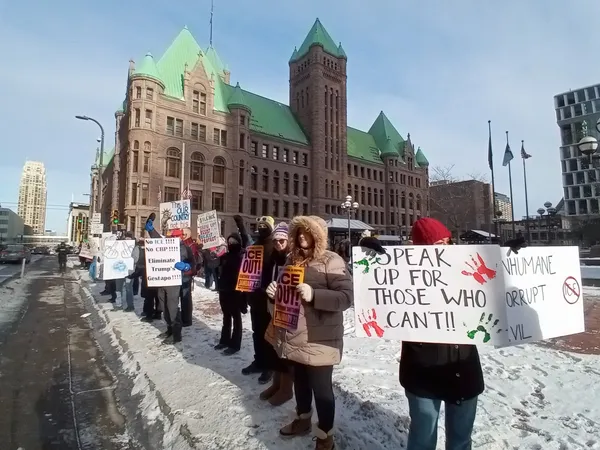
A faith delegation arrives as immigration enforcement actions draw sustained demonstrations
A Unitarian Universalist minister from Syracuse, New York, traveled to Minneapolis in late January to take part in a multiday clergy delegation formed to observe and document on-the-ground impacts of federal immigration enforcement activity in Minnesota. The visit occurred during a period of daily protests and heightened public attention focused on federal operations in the Twin Cities region.
The minister’s trip took place from Jan. 21 to Jan. 24, 2026, in the context of large, coordinated demonstrations that drew participation from labor groups, community organizations and interfaith leaders. The clergy delegation included hundreds of religious leaders who gathered in Minneapolis for briefings, prayer services and public actions aligned with broader calls to reduce or end intensified immigration enforcement in the state.
Airport protest leads to citations and arrests of clergy members
One of the highest-profile actions during this period occurred on Jan. 23, when clergy and community members demonstrated at Minneapolis–St. Paul International Airport. Airport police arrested about 100 participants. Those taken into custody were issued misdemeanor citations, including trespassing and failure to comply with a peace officer, and were released.
Airport officials said arrests followed a demonstration that exceeded the terms of the approved permit and disrupted operations. Protest organizers framed the airport action as a response to concerns about detention and transportation practices connected to immigration enforcement.
- Date of airport action: Jan. 23, 2026
- Approximate number arrested: about 100
- Common citations reported: trespassing and failure to comply with a peace officer
Street-level “witness” efforts and community monitoring
The Syracuse minister publicly described joining local observers who monitor enforcement activity in Minneapolis neighborhoods. Such monitoring efforts have relied on rapid-response communication and in-person observation, with participants reporting that they used whistles, horns and filming to alert residents and document encounters.
These practices have drawn sharply different characterizations. Supporters describe them as community defense and legal observation designed to deter misconduct and inform the public. Critics have raised concerns that confrontational dynamics can increase risk for civilians and escalate tensions during law enforcement encounters.
The clergy delegation’s stated purpose during the Minneapolis visit was to “witness” immigration enforcement activity and its effects on residents, while taking part in public prayer and protest actions.
Broader protests and ongoing scrutiny
The late-January clergy actions unfolded alongside larger demonstrations in Minneapolis, including a downtown rally and a wider day of protest that included business closures and calls for a work stoppage. Public debate has continued over the scale, tactics and oversight of federal immigration enforcement in Minnesota, as well as the appropriate role of local institutions, including faith communities, in responding to enforcement operations.
Legal and political disputes tied to the enforcement surge and resulting protests remained active into early February, with court proceedings and public safety concerns shaping how future demonstrations and enforcement activities may unfold.