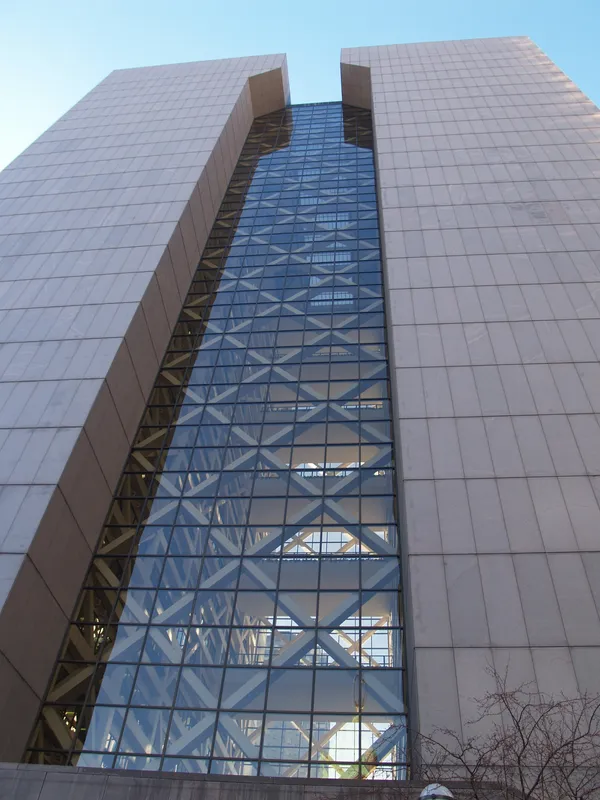
Target’s $110 million City Center lease termination reshapes downtown Minneapolis office market as complex goes for sale

Target ends a long-running downtown lease as City Center enters a new sales process
Target has agreed to pay $110 million to terminate its remaining office lease at the City Center complex in downtown Minneapolis, ending a financial obligation that continued long after most of its employees stopped working in the building. The termination comes as the City Center property is being marketed for sale, placing one of downtown’s best-known mixed-use complexes at the center of the region’s wider office reset.
The City Center campus includes the 33 South Sixth office tower and an attached retail mall integrated into Minneapolis’ skyway network. The complex opened in 1983 and for decades relied on a mix of office employment and pedestrian traffic generated by downtown commuters and hotel guests.
How City Center reached this point
In March 2021, Target announced it would move out of its City Center offices as the company adopted a more flexible work model following the pandemic-era shift in office usage. The retailer had leased close to 1 million square feet in the tower—space that subsequently sat largely unoccupied. Target pursued subleasing and later cleared remaining office assets through liquidation sales, reflecting a continued drawdown of its operational presence in the building.
Despite the reduced use, the lease itself remained in force. The $110 million termination payment effectively replaces the remaining stream of lease obligations with a single negotiated settlement, removing a major structural constraint for both tenant and landlord while the complex is put on the market.
Debt and ownership pressures
The City Center’s financial backdrop has tightened since the property’s last major transaction. The complex was purchased in 2018 for $320 million—then a record price for Minneapolis—amid broader investor interest in downtown office assets. Conditions have changed sharply since then as office vacancy has risen, borrowing costs increased, and refinancing has become more difficult across U.S. downtowns.
The property’s capital structure has also been under strain. A $200 million mortgage tied to City Center reached its maturity in January 2025 without a payoff or refinancing in place, after which lenders began evaluating next steps. The lease termination payment was used largely to reduce outstanding debt, while reserves have been maintained to cover ongoing operating and sales-related costs.
What the sale could mean for downtown
City Center is both a symbol and a practical test case for downtown Minneapolis’ transition from an office-heavy core to a more diversified mix of uses. With Target no longer the dominant occupant, prospective buyers will be assessing a complex that combines office floors, retail space, skyway connectivity, and adjacency to major venues and hotels—alongside the realities of weaker office demand.
- For the office market, the transaction underscores how legacy leases can be renegotiated to align building economics with current occupancy.
- For lenders and investors, the outcome will be watched as a signal of where large, centrally located assets can clear in today’s pricing environment.
- For the broader downtown ecosystem, changes at City Center may influence foot traffic patterns and redevelopment strategies near Nicollet Mall and the surrounding entertainment district.
City Center’s future is now tied less to a single anchor tenant and more to whether a new owner can reposition a large, complex asset for a post-2020 downtown economy.
A City Standing Firm: Your Minneapolis Morning Briefing for March 5

Major Bridge Closure on I-494 Starts This Morning; I-394 Lane Reductions Persist
Morning Mist Gives Way to a Record-Chasing March Thaw