Twin Cities Drum Collective organizes dispersed Minneapolis drum protest against ongoing ICE operations across the metro area
A musical protest format spreads across the city
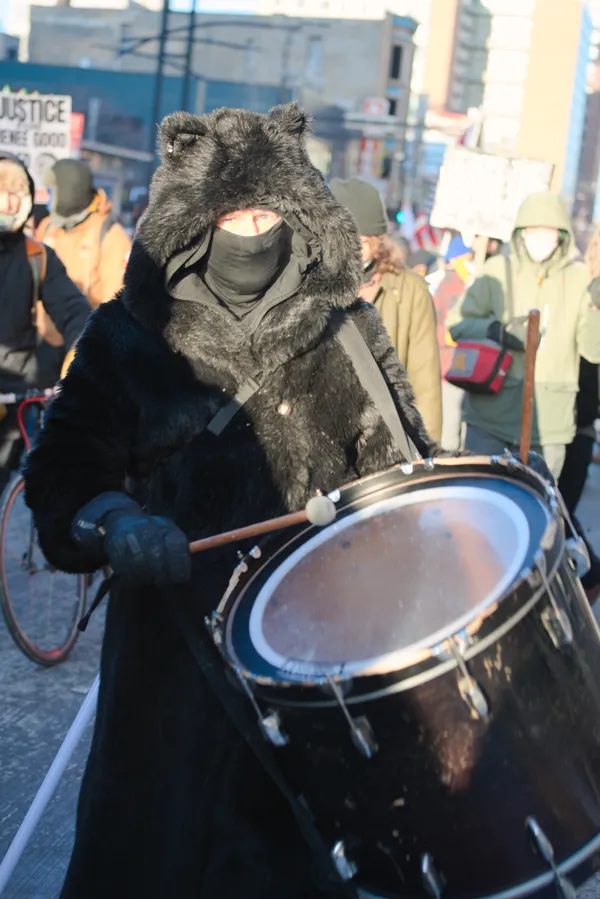
A dispersed drum protest against Immigration and Customs Enforcement (ICE) operations is set to take place across Minneapolis on Monday, February 2, 2026, organized by members of the Twin Cities Drum Collective. Organizers said roughly 100 drummers planned to spread out across multiple points in the city rather than gather in a single march or rally.
The action is designed to use percussion and coordinated street presence as a form of public demonstration. Organizers Tim Brunelle and Lane Peterson said the approach is intended to register opposition to ongoing federal immigration enforcement activity in the Twin Cities while lowering the logistical and safety pressures that can come with large, centralized crowds.
Context: a sustained period of anti-ICE mobilization in Minnesota
The drum protest comes amid weeks of heightened public activism related to immigration enforcement in Minnesota, including large demonstrations and work stoppages. In late January, major protests in Minneapolis drew large crowds despite subzero temperatures, and some actions included civil disobedience at Minneapolis–Saint Paul International Airport that led to arrests of clergy members during a demonstration focused on deportation flights.
While the drum protest is smaller than those mass events, it reflects a pattern of varied tactics that have appeared during this period: downtown rallies, airport demonstrations, business closures tied to coordinated protest days, and neighborhood-level rapid-response efforts aimed at monitoring or documenting enforcement activity.
How dispersed demonstrations change policing and public impact
By distributing participants across multiple locations, dispersed protests can create visibility in more neighborhoods while reducing chokepoints for traffic and crowd control. The format also changes how authorities and city services respond, shifting attention from one high-density event to multiple small gatherings that may be more difficult to manage as a single operation.
At the same time, the approach can limit the collective leverage of a single large crowd, particularly if participants are separated by distance and time. Organizers of the drum protest have emphasized music as the unifying element, with drumming used to signal coordinated action across the city.
What is known about the organizers and planned participation
- The event is organized by members of the Twin Cities Drum Collective.
- Organizers said about 100 drummers planned to participate.
- The drummers were expected to be spread across Minneapolis rather than concentrated in one location.
What happens next
The drum protest is expected to add another public demonstration to a fast-moving civic landscape in Minneapolis, where immigration enforcement has become a focal point for recurring actions by community groups, faith leaders, labor organizations, and residents. Organizers have not framed the drumming action as a one-time event, leaving open the possibility of additional music-based demonstrations if ICE activity continues in the metro.
Note: Minneapolis.news will update this report as additional confirmed details become available, including where drummers were deployed and whether any enforcement or public-safety response occurred.