Minneapolis-based Mortenson wins $610 million federal contract for Texas sterile-fly facility targeting New World screwworm
Federal construction award advances U.S. plan to expand sterile-insect capacity near the Mexico border
A Minneapolis-based construction and development company, Mortenson, has received a $610 million federal contract to build a sterile insect production facility in South Texas intended to strengthen U.S. defenses against the New World screwworm, a parasitic fly whose larvae can infest wounds in livestock and other warm-blooded animals.
The project is planned for Moore Air Base in Edinburg, Texas, in Hidalgo County, roughly 20 miles from the U.S.-Mexico border. Federal agriculture officials have framed the facility as a major expansion of domestic capacity to produce sterile male flies that can be released to interrupt reproduction of wild populations—a technique used for decades in eradication and containment programs.
How the sterile-insect approach is designed to work
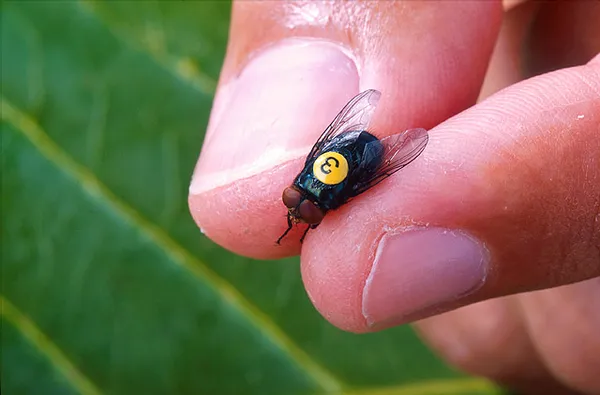
The New World screwworm fly (scientific name Cochliomyia hominivorax) can cause severe animal health and economic impacts when infestations occur. The sterile insect technique relies on mass-rearing male flies, sterilizing them, and releasing them so they mate with wild females, producing no viable offspring and reducing population growth over time.
U.S. agriculture officials have described sterile flies as a central tool in preventing northward spread and improving response options if detections occur closer to the United States.
Scale, timeline, and the broader federal program
The Texas facility is part of a wider federal strategy that has included funding for enhanced surveillance and related control tools. Recent federal planning documents and agency announcements have described a target maximum production capacity on the order of hundreds of millions of sterile flies per week for the planned Texas plant.
Separately, federal officials have also moved to expand dispersal logistics in the region, including opening a sterile fly dispersal facility in Tampico, Mexico, aimed at improving the ability to distribute flies where needed as part of containment efforts.
- $610 million: contract award for construction of the Texas sterile fly production facility.
- Moore Air Base, Edinburg: selected site near the southern U.S. border.
- Hundreds of millions per week: stated target scale for future sterile fly output once operational.
Federal officials have described the new facility as intended to bolster protection for U.S. livestock, wildlife, and public health by expanding domestic sterile-fly response capacity.
Why it matters for the livestock industry
Containment efforts are closely tied to livestock movement and trade conditions along the border. Agriculture authorities have previously announced restrictions on certain live-animal imports from Mexico during periods of heightened concern about the parasite’s spread. The planned Texas facility is designed to provide a faster, higher-volume domestic supply of sterile flies, reducing reliance on limited production capacity elsewhere and supporting sustained releases if needed.
Construction milestones, operational start dates, and final production capacity will depend on federal project execution and commissioning, with multi-year timelines previously outlined for bringing new production plants online.

Minnesota lawmakers advance AI guardrails with disclosure rules, insurance limits, and strengthened deepfake restrictions

Extreme Noise Records will relocate to East Lake Street after 26 years in Lyn-Lake

Fhima’s Minneapolis restaurant at City Center ends service, leaving another vacancy in historic dining room